
Depression is more than just feeling sad. It involves persistent changes in mood, thoughts, and behavior that last for weeks or months and interfere with daily life. Common signs include prolonged sadness or hopelessness, loss of interest in usual activities, changes in sleep or appetite, fatigue, difficulty concentrating, and feelings of guilt or worthlessness. Risk factors can include family history, stressful life events (even positive ones like moving or retirement), chronic illness, and substance use.
If you notice these symptoms consistently for two weeks or more, and they affect your work, relationships, or self-care, it may be time to seek help. This is especially urgent if you have thoughts of self-harm or suicide. Therapy can be very effective for example, Cognitive Behavioral Therapy (CBT) and Dialectical Behavior Therapy (DBT) have helped many people manage depression by changing negative thought patterns and coping with stress. In Massachusetts, there are accessible options: in-person counseling throughout Cape Cod and Barnstable County, as well as confidential online therapy across the state.
Sandra Kelly Therapy offers compassionate, evidence-based depression counseling for Cape Cod residents. Read on to learn how to recognize depression signs, understand risk factors, and get help in Barnstable County and beyond.
What Is Depression?
Depression is a common mental illness that affects mood, thinking, and physical health. According to the DSM-5, a major depressive episode is diagnosed when a person has five or more specific symptoms nearly every day for at least two weeks, and these cause significant distress or impairment. Importantly, at least one of the symptoms must be either a depressed mood or a loss of interest/pleasure in most activities.
Common symptoms (the DSM-5 criteria) include:
- Depressed mood most of the day. In children or teens, this may appear as irritability or crankiness rather than obvious sadness.
- Loss of interest or pleasure in activities that used to be enjoyable, including hobbies, socializing, work, or sex.
- Change in appetite or weight: Eating much less or much more than usual, or weight loss/gain of more than 5% of body weight in a month.
- Sleep disturbances: Insomnia or hypersomnia.
- Fatigue or low energy nearly every day, even after adequate rest.
- Psychomotor changes: Being noticeably agitated or slowed down in movement and speech, observed by others.
- Feelings of worthlessness or excessive guilt: Harsh self-criticism or guilt.
- Difficulty thinking or concentrating: Trouble focusing, making decisions, or remembering things.
- Thoughts of death or suicide: Recurring thoughts of dying, suicide, or engaging in self-harm.
These symptoms must represent a change from the person’s previous functioning and cause problems at work, home, or socially. If these symptoms last for most of the day, nearly every day, for two weeks or longer, a diagnosis of depression is likely. However, only a qualified professional can diagnose depression. If you or a loved one has many of these signs, it’s wise to consult a health professional.
Common Signs and Symptoms
Depression shows up emotionally, physically, and behaviorally. The Centers for Disease Control and Prevention (CDC) describes symptoms of depression as more than just feeling blue; they persist and disrupt daily life. Common signs include:
- Emotional signs: Persistent sadness, emptiness, or hopelessness; feeling irritable, frustrated, or anxious. You might cry more easily or feel a constant sense of guilt or worthlessness.
- Loss of interest: Activities or hobbies that once felt fun become uninteresting or pointless. You may withdraw from friends, skip social events, or have little motivation.
- Physical signs: Changes in sleep and appetite. You might wake up very early and be unable to get back to sleep, or sleep all day and still feel tired. Common aches and pains that don’t improve with treatment are also reported.
- Cognitive changes: Trouble concentrating, remembering details, or making decisions. Everyday tasks feel difficult or overwhelming.
- Fatigue: A strong lack of energy or feeling exhausted even after a full night’s sleep.
- Self-critical thoughts: Frequent feelings of guilt or worthlessness, as if you are a failure or a burden to others.
- Thoughts of death or suicide: Thinking about death, dying, or suicide is a very serious sign.
It’s important to note that everyone’s experience is different. Not all depressed people feel the same symptoms. Some may have more physical symptoms, while others have more emotional symptoms. The severity can also range from mild to very severe. If any of these symptoms persist and disrupt your life for two weeks or more, it could indicate depression.
Who Gets Depression? Risk Factors and Triggers?
Depression can affect anyone, regardless of age, background, or lifestyle. However, research has identified several risk factors that make someone more likely to develop depression. These include:
- Genetics and family history: Having a blood relative with depression increases your risk.
- Major life events: Stressful or traumatic events, even if planned, can trigger depression. Similarly, unexpected losses or abuse/neglect can be powerful triggers.
- Chronic medical conditions: Illnesses such as cancer, stroke, diabetes, chronic pain, or neurological disorders can increase depression risk. Sometimes the direct effect of a medical condition on the brain or the stress of living with illness contributes to depression.
- Substance use: Alcohol or drug misuse can lead to depression. Certain medications can also have depression as a side effect always discuss concerns with your doctor.
- Personality factors: Individuals who are more sensitive to stress or who tend to ruminate may be more vulnerable.
- Previous episodes: If you’ve had one depressive episode in the past, you are at higher risk for having another.
Local factors on Cape Cod may include seasonal stress, caring for elderly family, or the COVID-19 pandemic’s lingering effects on mental health. Community and environmental factors can also play a role.
Regardless of risk factors, it’s crucial to remember that depression is not a character flaw or weakness. It’s a common medical condition linked to brain chemistry and life experiences. Early awareness of personal risk factors can help you notice symptoms sooner and seek help.
Warning Signs and When to Get Immediate Help?
Some signs of depression are particularly urgent. If you or someone you know exhibits any of the following red flags, seek help immediately:
- Suicidal thoughts or behaviors: Any thoughts about suicide or self-harm are emergencies. If you have these thoughts, call 988 or go to an emergency room. You can also text 988 or call (833) 773-2445 (the Massachusetts Behavioral Health Help Line) for 24/7 support.
- Planning or attempts: If there is any planning or attempt to hurt yourself, call 911 immediately or go to the nearest emergency department. Hospitals are prepared to keep you safe and provide crisis support.
- Inability to care for yourself: Severe neglect of basic needs due to feeling depressed could indicate a life-threatening episode.
- Drastic behavior changes: If a previously depressed person suddenly seems calm or happy after a long sadness, it could be a sign they’ve decided to attempt suicide. Take any talk or sign of suicide seriously.
- Aggression or harm to others: Although less common, if depression includes thoughts of harming someone else or violent behaviors, seek immediate professional help or call emergency services.
You are not alone in these feelings, and help is available 24/7. In Massachusetts and Cape Cod, you can reach out to these crisis lines right away:
- National Suicide & Crisis Lifeline: Dial or text 988 for free, confidential 24/7 crisis counseling.
- Massachusetts Behavioral Health Help Line: Call or text 833-773-2445 to connect with a trained counselor anytime. This state helpline offers crisis intervention and referrals.
- Cape Cod Samaritans: Call 508-548-8900 (or 800-893-9900) for local, 24/7 suicide prevention support.
- Emergency Services (9-1-1): If there is immediate danger to life, call 911 without hesitation.
When to Seek Therapy or Counseling?
It can be hard to know when “just feeling down” becomes depression. A good rule of thumb from health experts is: If low mood or anxiety lasts more than two weeks and starts to impact your daily life, schedule an evaluation with a mental health professional. Specifically, consider therapy if you notice:
- Persistent symptoms that don’t go away with time or efforts to cope.
- Difficulty doing everyday tasks: for example, you can’t get out of bed, attend work or school, care for your family, or keep up with personal hygiene due to emotional or physical exhaustion.
- You start relying on alcohol, drugs, or other unhealthy behaviors to feel better.
- Loved ones express concern that you’re not yourself, or you find yourself withdrawing from life and relationships.
- You think about death or suicide, even if you are not planning anything.
- Stressful events (divorce, job loss, medical issues) are overwhelming your ability to cope, and feelings persist beyond what you expected.
- You have multiple symptoms of depression that occur together.
The CDC advises: “If you think you are depressed, talk with your doctor or a mental health professional immediately”. There is no shame in asking for help therapy is a confidential, judgment-free zone where you can get support and guidance.
How Therapy Helps with Depression
Professional therapy offers tools to cope with depression. Therapists use evidence-based approaches such as:
- Cognitive Behavioral Therapy: This focuses on identifying and changing negative thought patterns and beliefs. For example, CBT helps you challenge thoughts like “I’m worthless” by examining the evidence and reframing them more realistically. Research shows CBT can significantly reduce depressive symptoms, often on par with medication.
- Dialectical Behavior Therapy: Initially developed for intense emotional disorders, DBT teaches skills to regulate emotions, tolerate distress, and improve relationships. It is especially helpful if you feel very overwhelmed by emotions or have concurrent issues like self-harm behaviors.
- Interpersonal Therapy: Focuses on improving communication and relationships, which can boost mood by strengthening your support network.
- Mindfulness and Behavioral Activation: These techniques encourage staying present and gently re-engaging in rewarding activities, which can lift mood over time.
- Medication management: Therapists can recommend or prescribe antidepressant medications when appropriate. Medications adjust brain chemistry and can relieve symptoms, and they are often used along with therapy. Finding the right medication/dose can take time, but many people benefit greatly from combined treatment.
- Other therapies: For some, approaches like EMDR can help when trauma is involved; others may benefit from group therapy or family therapy as part of a treatment plan.
Therapy is a partnership: you and the therapist work together to set goals. The therapist provides a safe space to explore feelings without judgment, and teaches coping skills. Often within a few weeks to months of regular therapy, people begin to feel gradual improvement: thinking more clearly, regaining interest in life, and coping better with stress. For many, therapy leads to long-term resilience and helps prevent future episodes.
Accessing Therapy in Cape Cod and Barnstable County
There are many ways to get depression counseling on Cape Cod and across Massachusetts:
- Sandra Kelly Therapy (Cape Cod) – Our practice specializes in anxiety, stress, trauma, and depression counseling for adults. We offer in-person therapy in Barnstable County and secure online therapy throughout Massachusetts. Online sessions are convenient and private you can meet with a licensed therapist from home. NIMH notes that telehealth is an effective way to improve access to care. Sandra Kelly Therapy provides compassionate, individualized treatment, including CBT and trauma-informed care, via telehealth and in-office.
- Community Behavioral Health Centers: These centers provide urgent and outpatient mental health care to people of all incomes. They offer crisis evaluation, counseling, case management, and medication services. You can find a nearby CBHC through the Mass. Behavioral Health Help Line or mass.gov’s center locator. No insurance is needed for crisis care.
- Cape Cod Healthcare (CCHC) – The local hospital system has behavioral health services. They operate Crisis Stabilization and Urgent Care lines. In an emergency, you can contact CCHC’s 24/7 crisis line at 800-513-4728 or go to Cape Cod Hospital in Hyannis. CCHC also offers outpatient therapy and psychiatry.
- BayCove Cape Cod: This non-profit operates a 24-hour crisis hotline and walk-in services. For Cape Cod, 833-BAY-COVE (833-229-2683) is available anytime. BayCove provides mobile crisis teams, stabilization units, and outpatient therapy in Hyannis and other towns.
- Primary Care Providers: Sometimes your family doctor or nurse practitioner can be a good first contact. They can screen for depression, start medication, and refer you to a therapist. If you have insurance, they can often refer you to in-network counselors.
- Online Therapist Directories: Websites like Psychology Today or ADAA’s directory allow you to find local therapists. Sandra Kelly Therapy also offers appointment booking online for Massachusetts residents.
- Support Groups: Local NAMI chapters offer peer-led support groups for depression and mental health. NAMI Cape Cod & Islands provides free support, education, and advocacy.
No matter your situation, help is available. If you’re uninsured or need low-cost care, mention this to your therapist or counselor; many offer sliding-scale fees or payment plans, and community clinics may also help. The Barnstable County Department of Human Services and local health centers can assist with referrals and enrollment in health plans.
What to Expect at Your First Appointment
Starting therapy can feel overwhelming. Here’s what usually happens at the first visit:
- Assessment: The therapist will ask about your symptoms, history, and how long you’ve been feeling this way. They’ll inquire about your mood, sleep, appetite, energy, concentration, and any thoughts of self-harm. This may include filling out questionnaires to gauge symptom severity.
- Discuss Goals: You’ll talk about what you hope to achieve. For example, reducing anxiety, returning to work, improving relationships, or ending suicidal thoughts. Together you set treatment goals.
- Medical History: They’ll ask about medications, medical conditions, and family history of mental illness to ensure a safe plan.
- Therapy Plan: Based on the information, the therapist will suggest an approach.
- Privacy: Everything you say is confidential. Therapists are bound by law to keep sessions private, so you can speak openly.
- Next Steps: If appropriate, you’ll schedule follow-up sessions. The therapist may give you “homework” like journaling, practicing relaxation, or identifying thought patterns.
Going to therapy is like training for mental health: the more you actively participate, the better the outcome. Write down questions beforehand if it helps, and feel free to share any concerns. A good therapist will listen without judgment and explain the process.
Practical Next Steps
If you’ve recognized signs of depression and decided to seek help, here’s a general roadmap:
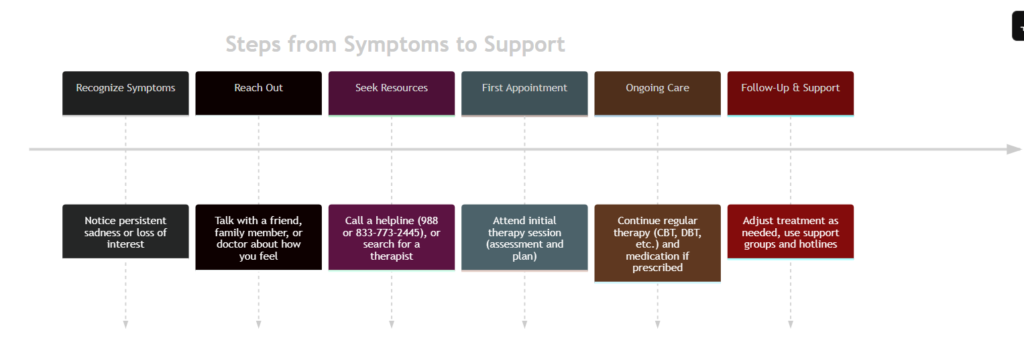
This timeline shows the journey from noticing something is wrong to engaging in treatment. Each person’s path is unique; some may jump straight to therapy, while others start by talking with friends or calling a helpline. The key is taking one step even a small one toward getting help.
Local Resources
If you or someone you care about needs support, the following local resources are available (all in or serving Barnstable County):
| Resource | Service | Hours | Contact / Website |
|---|---|---|---|
| Mass Behavioral Health Help Line | 24/7 mental health and substance-use helpline (calls/text/chat) | 24/7 | Call/text 833-773-2445 or visit masshelpline.com |
| 988 Suicide & Crisis Lifeline | 24/7 national crisis line (suicidal ideation) | 24/7 | Dial or text 988 (free) |
| Samaritans of Cape Cod & Islands | Local suicide prevention & emotional support | 24/7 | 508-548-8900 or toll-free 800-893-9900; capesamaritans.org |
| Bay Cove (Cape & Islands Crisis) | 24/7 crisis intervention (mental health/substance) | 24/7 | 833-BAY-COVE (229-2683); baycovecapecod.org |
| Cape Cod Healthcare – Behavioral Health | 24/7 psychiatric urgent care line | 24/7 | 800-513-4728; capecodhealth.org/behavioral-health |
| NAMI Cape Cod & Islands | Support, education and advocacy for mental health | M–F, day | 508-778-4277; namicapecod.org (support groups, classes) |
Frequently Asked Questions
Q: How do I know if I’m really depressed or just going through a rough patch?
A: Feeling down at times is normal. Depression is diagnosed when symptoms are intense, last most of the day nearly every day for at least two weeks, and significantly impair life (work, school, relationships). Key red flags include loss of interest in all activities, persistent hopelessness, and changes in sleep/appetite. If you’re unsure, it’s best to talk with a therapist or doctor. They can help distinguish clinical depression from situational stress.
Q: Can therapy really help, or should I just take medication?
A: Both therapy and medication can be effective for depression. Many studies show that Cognitive Behavioral Therapy (CBT) and other psychotherapies significantly reduce depression symptoms, especially when combined with medication. Therapy teaches coping skills and addresses underlying issues. Medications adjust brain chemistry and can boost mood. A therapist or psychiatrist can advise on the best approach; often it’s a combination of both.
Q: How long does therapy take before I feel better?
A: This varies by individual and severity. Some people notice small improvements within a few weeks of therapy. Generally, meaningful changes often begin in 6–12 sessions, but full recovery may take longer. Depression can recur, so continued self-care and therapy help maintain wellness.
Q: What if I can’t afford therapy?
A: There are options. Many therapists offer sliding scale fees. Community clinics and non-profits (like Bay Cove or local health centers) provide low-cost counseling. The Massachusetts Behavioral Health Help Line (833-773-2445) can connect you to services regardless of insurance. Online services like Open Path or community mental health centers (CBHC) may also help. Don’t let cost stop you from seeking at least an initial consultation.
Q: I have had depression before. Will I always need therapy?
A: Not necessarily “always,” but since depression can return, having periodic therapy or a support system can help prevent relapse. Many people do a few months of therapy to build skills and then attend occasional booster sessions as needed. Your therapist can help you make a plan for long-term self-care after acute treatment ends.
Moving Forward with Support
Recognizing depression and asking for help is a brave and important step. You don’t have to face this alone. Therapists at Sandra Kelly Therapy are experienced in helping people on Cape Cod and across Massachusetts overcome depression and regain a sense of hope and purpose. Our compassionate approach includes CBT, mindfulness, and holistic care tailored to your needs.
If you live in Barnstable County or elsewhere in MA, we invite you to take the next step: Book an appointment or call our Cape Cod office. We work with you to create a safe, confidential space to talk through what you’re feeling and develop strategies to heal.
You deserve support and relief. Depression is treatable, and there are effective therapies and resources available locally. Sandra Kelly Therapy is here to guide you toward recovery and resilience.