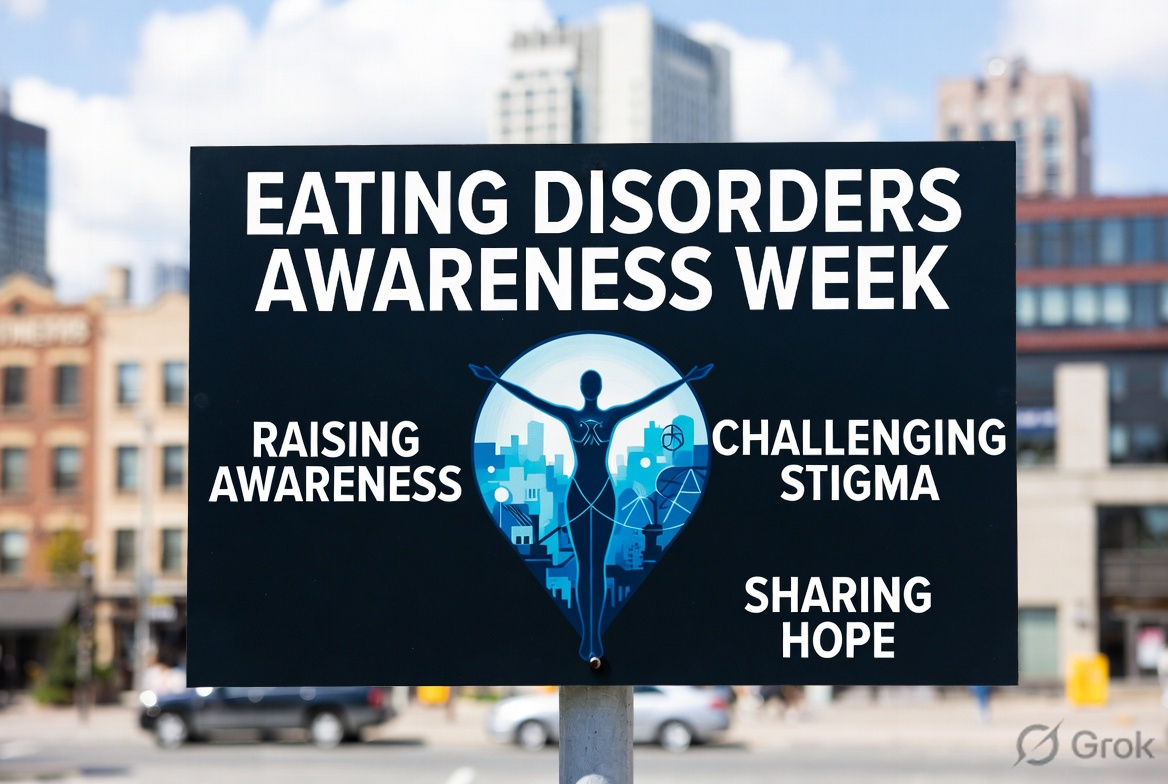
Every year, Eating Disorders Awareness Week provides an important opportunity to start conversations about eating disorders, reduce stigma, and support those affected by these complex mental health conditions. At Sandra Kelly Therapy, this week serves as a reminder that healing and recovery are possible, and that no one has to struggle alone.
Eating Disorders Awareness Week focuses on three key goals: raising awareness, challenging stigma, and sharing hope with everyone impacted by eating disorders. Through education, compassionate conversation, and access to professional support, we can create a more understanding and supportive community for those navigating these challenges.
Understanding Eating Disorders
Eating disorders are serious mental health conditions that affect a person’s relationship with food, body image, and self-perception. They can impact individuals of all ages, genders, and backgrounds, and they often involve emotional, psychological, and physical components.
Some of the most common eating disorders include:
Anorexia Nervosa
Anorexia nervosa is characterized by an intense fear of gaining weight and a distorted body image that leads individuals to restrict food intake significantly. This condition can have severe physical consequences if not addressed with proper care and support.
Bulimia Nervosa
Bulimia nervosa involves cycles of binge eating followed by behaviors intended to prevent weight gain, such as purging, excessive exercise, or fasting. Individuals with bulimia often experience feelings of shame, guilt, and loss of control around food.
Binge Eating Disorder
Binge eating disorder involves recurring episodes of consuming large amounts of food, often accompanied by feelings of distress, guilt, or embarrassment afterward. Unlike bulimia, these episodes are not typically followed by purging behaviors.
Eating disorders are not simply about food. They often reflect deeper emotional struggles such as anxiety, trauma, perfectionism, or difficulties with self-esteem.
Why Eating Disorders Awareness Week Matters?
Despite how common eating disorders are, many individuals suffer in silence due to stigma, misunderstanding, or fear of judgment. Eating Disorders Awareness Week aims to change that by encouraging open dialogue and increasing access to resources.
1. Raising Awareness
Many people still believe harmful myths about eating disorders. For example, some think they only affect young women or that they are simply about dieting. In reality, eating disorders can affect anyone regardless of age, gender, body type, or background.
By spreading accurate information, we can help people recognize warning signs earlier and encourage individuals to seek support.
2. Challenging Stigma
Stigma can make it difficult for people to talk about their struggles. Feelings of shame or fear of being misunderstood often prevent individuals from reaching out for help.
Awareness initiatives remind us that eating disorders are legitimate mental health conditions, not personal failures. When we approach the topic with empathy and compassion, we create a safer space for healing.
3. Sharing Hope
Recovery from an eating disorder is possible. With the right support system, therapy, and resources, individuals can rebuild a healthier relationship with food and their bodies.
Stories of recovery and resilience remind those who are struggling that they are not alone and that change is achievable.
Signs That Someone May Be Struggling
Eating disorders can sometimes be difficult to recognize because many people hide their behaviors. However, there are common warning signs that may indicate someone needs support:
- Preoccupation with weight, body shape, or calories
- Avoiding meals or eating in secret
- Frequent dieting or restrictive eating patterns
- Sudden changes in weight or eating habits
- Excessive exercise
- Feelings of guilt or shame after eating
- Withdrawal from social situations involving food
If you notice these patterns in yourself or someone you care about, reaching out for professional support can be an important step toward healing.
The Role of Therapy in Recovery
Therapy plays a vital role in helping individuals address the emotional and psychological aspects of eating disorders. A supportive therapeutic environment allows individuals to explore the underlying challenges contributing to their relationship with food and body image.
At Sandra Kelly Therapy, treatment focuses on compassionate, individualized care that helps clients:
- Understand the emotional roots of their eating patterns
- Develop healthier coping strategies
- Improve self-esteem and body acceptance
- Build a more balanced relationship with food
- Navigate anxiety, trauma, or stress that may contribute to eating difficulties
Therapy is not about judgment or control. Instead, it is about creating a space where individuals feel heard, supported, and empowered to move toward recovery.
Supporting Someone with an Eating Disorder
If someone you care about may be struggling, your support can make a meaningful difference. Here are a few ways to help:
Listen Without Judgment
Create a safe space for open conversation. Avoid criticism or assumptions, and focus on listening with empathy.
Encourage Professional Support
Eating disorders often require professional guidance. Gently encourage your loved one to speak with a therapist or healthcare provider.
Avoid Focusing on Weight or Appearance
Instead of commenting on body size or food choices, emphasize overall well-being and emotional health.
Educate Yourself
Learning more about eating disorders can help you better understand what your loved one may be experiencing.
Breaking the Silence Around Eating Disorders
One of the most powerful outcomes of Eating Disorders Awareness Week is the reminder that talking about mental health matters. When individuals feel safe discussing their experiences, it reduces isolation and promotes understanding.
Communities can help break the silence by:
- Promoting body positivity and self-acceptance
- Encouraging conversations about mental health
- Sharing reliable information and resources
- Supporting those who are seeking help
Every conversation helps move us closer to a culture where people feel empowered to seek support without fear or shame.
A Message of Hope
Eating Disorders Awareness Week is ultimately about hope. While eating disorders can be challenging and complex, recovery is possible with the right support and compassionate care.
At Sandra Kelly Therapy, the goal is to provide a safe and supportive space where individuals can explore their experiences, reconnect with their sense of self, and move toward a healthier relationship with food and their bodies.
If you or someone you know is struggling with an eating disorder, remember that help is available. Taking the first step toward support can open the door to healing and lasting change.
Reaching Out for Support
If you are seeking support for eating disorders, anxiety, trauma, or related challenges, professional guidance can make a meaningful difference.
Sandra Kelly Therapy offers compassionate counseling and therapy services designed to help individuals navigate complex emotional experiences and build healthier, more fulfilling lives.
This Eating Disorders Awareness Week, let’s work together to raise awareness, challenge stigma, and share hope with everyone impacted by eating disorders. Recovery is possible, and support is always within reach.